Views: 6 Author: Site Editor Publish Time: 2026-03-03 Origin: Site
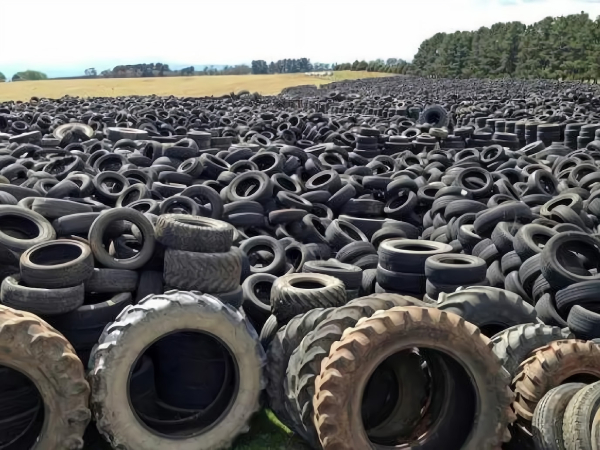
As a source of black pollution, scrap tires pose a serious hazard to the environment, making their treatment a prominent environmental issue today. Scrap tire pyrolysis is currently the most popular method for processing waste tires and is widely regarded as the ultimate treatment approach. Scrap tire pyrolysis is a complex physicochemical process, the fundamental principle of which involves using thermal energy at high temperatures to decompose the high-molecular compounds in tires into low-molecular compounds. While rubber pyrolysis technology is not a new concept, its industrial application has long faced bottlenecks. Research from the authoritative agency Lux Research indicates that the actual production capacity of newly built pyrolysis projects globally is generally below their designed capacity. The fundamental reason is that most technical solutions remain at the experimental stage and cannot meet the requirements for industrial continuous operation.
Through nearly 40 years of technological accumulation, Niutech has independently developed its "Key Technology and Equipment for the Resourceful Disposal of Scrap Tires via Industrial Continuous Pyrolysis." By employing eight core technologies, including coking-free technology, gas-tight sealing technology, and anti-polymerization technology, it has successfully solved the industry-wide problems of coking, sealing difficulties, and product polymerization.
Through the application of this technology in tire pyrolysis equipment, a scrap tire pyrolysis rate exceeding 99% can be achieved, completing the "tire-to-oil" process. Ultimately, a single tire can yield products such as pyrolysis oil, carbon black, steel wire, and combustible gas. The pyrolysis oil obtained from tire pyrolysis is a type of heavy oil with a calorific value exceeding 10,000 kcal. It can be used directly as fuel oil, utilized for power generation in heavy oil generators, or, after refining, added to ship engines as fuel oil.
The recovered steel wire can be remelted for reuse in production. After deep processing, the carbon black can be applied in fields such as tires and rubber. The combustible gas can be recycled and used as fuel for the plant itself.
Such high-value applications and economic benefits truly transform scrap tires into "black gold."
Niutech not only performs exceptionally well in the domestic market but has also exported its advanced pyrolysis technology to dozens of countries worldwide, becoming a "Chinese business card" in the international high-end pyrolysis field. Its scrap tire treatment technology and tire pyrolysis equipment have obtained EU CE certification, German TÜV certification, and ATEX explosion-proof certification, and its projects have achieved ISCC certification. Niutech's technology and equipment are applied in numerous countries and regions, including Germany, Denmark, Brazil, and South Korea. Furthermore, Niutech is actively exploring and implementing a dual-wheel drive model of "equipment + operation," upgrading from an equipment supplier to a comprehensive service provider offering "equipment + operation." Niutech has launched a comprehensive scrap tire utilization operation project with an annual processing capacity of 200,000 tons, which is expected to become one of the largest tire collection, processing, and comprehensive utilization projects nationally and globally.
Against the backdrop of the "dual-carbon" goals, and with the circular economy's advantages of "low consumption, low emissions, and high efficiency," advanced tire recycling solutions demonstrate broad market prospects.