Views: 2 Author: Site Editor Publish Time: 2026-03-25 Origin: Site
Since the 1950s, over 10 billion tons of plastic have been produced globally, of which more than 8 billion tons have ultimately become waste, with plastic waste still increasing at a rate of 350 million tons per year. According to statistics, around 10 million tons of plastic flow into the ocean annually, forming informal accumulation zones such as the "Great Pacific Garbage Patch."
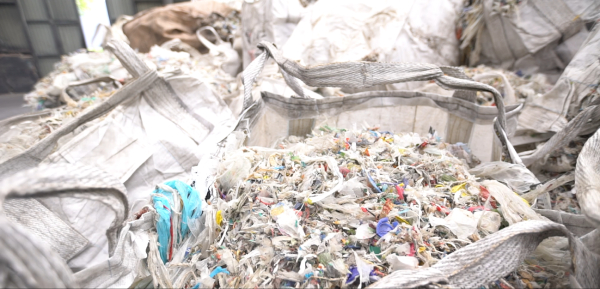
A 2017 study led by Roland Geyer at the University of California, Santa Barbara, revealed that only 6% of the plastic manufactured by humans has been recycled, with the majority ending up in landfills.
Traditional waste plastic treatment methods involve sorting, and even manual separation to select high-quality portions, before they can be sent for mechanical recycling. Mechanical recycling entails a series of processes—washing, shredding, grinding, and melting—to turn waste plastics into granular plastic raw materials for recycling.
However, most waste plastics are not suitable for mechanical recycling. Even when recycled, the performance of the resulting products often falls short of virgin materials. Moreover, these recycled plastics cannot be used for food packaging due to the lack of food-contact approval. Additionally, the mechanical recycling process causes some degradation, meaning the quality of the plastic diminishes with each cycle until it is no longer usable.
In contrast, advanced recycling technologies utilize chemical methods to recover plastics, allowing them to be repeatedly returned to a virgin-like state. Theoretically, with chemical recycling, even the most mixed and contaminated waste can be broken down into pure raw materials—a process often referred to as "plastic-to-oil." These oils can then be remanufactured into plastics with physical and chemical properties identical to virgin materials, or into other industrial products—a process that can be repeated continuously, achieving theoretically "infinite recycling."
The most mature advanced recycling technology currently is pyrolysis, which enables plastics to revert to their original material state. In an oxygen-free environment and at specific temperatures, plastic molecules are transformed into diesel, naphtha, waxes, monomers, and other small molecules, which can then be further synthesized into various useful chemical products. The pyrolysis of plastics also generates synthesis gas (syngas)—a mixture of carbon monoxide and hydrogen—which can also serve as a chemical feedstock. This represents a mature, industrially proven plastic recycling solution.
Among numerous enterprises, Jinan Niutech Environmental Technology Co., Ltd. has become a "Chinese business card" in the global high-end pyrolysis field for waste plastics, owing to its profound technological expertise and successful international projects. Its core advantage lies in overcoming the global challenge of "stable continuous operation" in pyrolysis industrialization. Its self-developed continuous pyrolysis system enables large-scale industrial processing, generating no secondary pollution during continuous pyrolysis while meeting all environmental standards.
Niutech's technological strength has been rigorously tested in international high-end markets, with its projects becoming industry benchmarks.
According to the latest statistics from the Nova Institute, over 100 advanced plastic recycling technologies are currently in operation or under development. Dozens of plants have been commissioned in Europe, with a total annual capacity of 270,000 tons, a figure expected to double by 2026.
Among these, the Danish chemical recycling project for waste plastics, backed by BASF, utilizes Niutech's technology and equipment. This project converts plastic waste from household waste into raw materials for producing recycled plastics, achieving genuine chemical recycling.
As environmental protection gains increasing attention, advanced recycling technologies are poised to further unlock their potential. It is anticipated that the 90% of plastics currently not recycled could be brought into the cycle of reuse in the future.